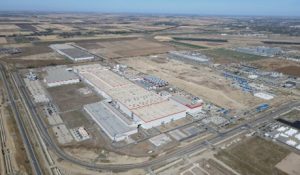
 CATL has begun trial operations at the first cell building of its Debrecen battery factory in Hungary, marking a major step toward series battery-cell production at what is planned to become the company’s largest manufacturing base outside China.
First two cell-production lines enter trial phase
The Chinese battery manufacturer said trial production started on 22 September 2026 after it completed the conditions and secured the permits required for the initial operating phase. The trial run covers the first two production lines at the Debrecen cell-manufacturing facility.
CATL said the purpose of the trial phase is to establish, optimise and validate manufacturing equipment and production processes before the start of series production. The company did not provide a date for the beginning of full-scale cell output.
Construction of the first cell building began in summer 2023, after CATL announced the Debrecen investment in August 2022. According to the company, the building had been equipped with advanced production technology by spring 2026. It received its occupancy permit in August 2026, followed by the completion of requirements connected to its Integrated Pollution Prevention and Control, or IPPC, permit.
Authorities reviewed earlier local concerns
Before the occupancy permit was issued, the Hajdú-Bihar County Government Office carried out regular site inspections at CATL’s facilities. Those inspections followed issues that had raised serious concerns among local residents, CATL said.
Authority representatives confirmed that deficiencies identified earlier during the permitting process had been addressed, according to the company. CATL said it will continue working with government bodies and regulators on environmental matters as well as employee health and safety.
During trial operations, the company says it will monitor employee-health, safety and environmental factors and submit the results proactively to the authorities. CATL has also stated that regulators are welcome to visit the site at any time.
The permitting and monitoring process is significant because large battery-cell factories face close scrutiny over industrial emissions, water use, safety and local environmental impacts. For battery manufacturers expanding in Europe, securing approvals is not the final step: production ramp-up must also demonstrate that equipment and processes can operate within the conditions established by regulators.
A potential 100 GWh supply hub for European EV production
CATL is positioning Debrecen as a supply base for European carmakers that have built substantial electric-vehicle production capacity in Hungary. The company said the plant is intended to integrate into Europe’s automotive and e-mobility supply chain and serve leading European automakers.
CATL has already been producing battery modules in Debrecen since autumn 2024. It said it has manufactured 537,000 modules at the site so far. Cell production is a more substantial addition to the local operation, as it moves a key stage of battery manufacturing closer to vehicle assembly plants.
Once all facilities are complete, CATL expects the Hungarian site to have 100 GWh of capacity. The company says this would make Debrecen its largest manufacturing base outside China. It has not specified in this announcement when every planned facility will be completed or when the site will reach its intended capacity.
For European EV makers, local cell production could strengthen the regional battery supply chain, although the practical impact will depend on the pace of CATL’s transition from trial lines to series output. The Debrecen plant also underlines Hungary’s growing role in European EV manufacturing, where battery suppliers and vehicle producers are increasingly locating production operations in close proximity.