Toyota is pursuing a broad battery strategy spanning nickel-metal hydride, lithium-ion and solid-state technologies, reflecting its approach of offering hybrid, plug-in hybrid and battery-electric vehicles alongside one another. The company says its battery development is focused on quality, durability, reliability, safety, performance and cost, while also building supply capacity through in-house production and partnerships.
Long battery manufacturing record and new supply structure
Toyota says it has been developing and producing vehicle batteries for decades. In 1996, it established the company now known as Prime Earth EV Energy, which has produced more than 20 million batteries, according to Toyota. Its early work centred on nickel-metal hydride (NiMH) technology before lithium-ion battery development was accelerated in 2003.
The Japanese carmaker created its Battery Research Division in 2008 to advance work on solid-state cells and other next-generation technologies. In 2021, Toyota established Prime Planet Energy & Solutions to bring together battery activities and speed the development of higher-quality, more affordable products.
Toyota produces batteries internally while also working with external partners on development and supply. The company says this structure is intended to share knowledge and provide a more stable supply base as electrified-vehicle production increases.
NiMH remains part of Toyota’s hybrid plans
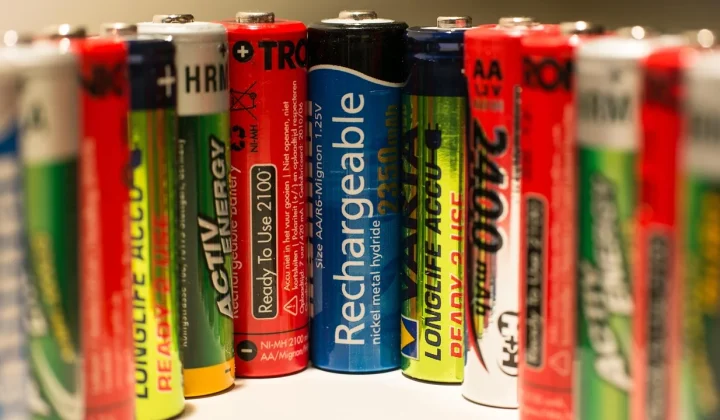
While many manufacturers are concentrating their investment on lithium-ion packs for fully electric vehicles, Toyota expects NiMH technology to retain a role in hybrid-electric vehicles (including e-sedan). It plans to further develop both NiMH and lithium-ion batteries for HEVs.
A key element is Toyota’s bipolar NiMH battery, which the company says is already in production and is the world’s first of its kind. Compared with a conventional NiMH battery, Toyota says the bipolar design is smaller and lighter, uses fewer critical earth materials and can reduce costs.
The company also claims the battery delivers double the output density of a regular NiMH unit. Instantaneous power is particularly relevant to hybrid systems, where the battery must repeatedly support electric propulsion and energy recovery during acceleration and braking.
Lithium-ion cost targets for future battery-electric models
For plug-in hybrids and battery-electric vehicles, Toyota is working on lithium-ion batteries designed to improve endurance. It is targeting commercialisation of a new lithium-ion battery type in the second half of the 2020s, although it has not detailed specific vehicle applications or production timing.
Toyota forecasts that, in the short term, it can reduce the cost of lithium-ion BEV batteries by 30% or more. It also expects to cut vehicle energy consumption by 30%, which it says would allow a battery pack to be 30% smaller while retaining the same driving range.
Combining those measures, Toyota expects a 50% reduction in battery cost per vehicle during the second half of the 2020s. These are company targets rather than confirmed production results. If achieved, the strategy could reduce vehicle weight, improve packaging flexibility and support lower-priced battery-electric vehicles.
Solid-state batteries under development for several powertrains
Toyota continues to position solid-state batteries as a longer-term technology with potential advantages in energy density, weight and charging performance. Solid-state designs replace the liquid electrolyte used in conventional lithium-ion cells with a solid electrolyte.
According to Toyota, prototype-vehicle testing has shown strong instantaneous-power characteristics. The company is assessing solid-state battery use not only in BEVs and PHEVs, but also in hybrid vehicles, where high-power delivery could be especially useful.
Toyota says it is accelerating development of capacity-focused solid-state batteries, but it has not provided a commercial launch date in its European battery overview. For customers, Toyota backs its current electrified-vehicle traction batteries through its Battery Care Programme, covering batteries for BEVs, PHEVs and HEVs for up to 10 years or 1 million kilometres, subject to annual Battery Health Checks and country-specific terms.