Global plug-in vehicle registrations reached about 1.8 million units in August, up 5% year on year, according to figures reported by CleanTechnica. Battery-electric vehicles accounted for the bulk of that growth, while plug-in hybrid volumes declined sharply, pushing BEVs to 20% of the overall new-car market and plug-ins collectively to a 27% share.
BEVs strengthen while plug-in hybrids retreat
Battery-electric vehicle registrations rose 13% from a year earlier in August, reaching roughly 1.3 million units. That gave BEVs a 73% share of all plug-in registrations for the month, one of their strongest results in recent years. Plug-in hybrid electric vehicles, by contrast, fell 12% year on year.
The diverging trends have become increasingly visible in the year-to-date results. Global plug-in sales were up 4% through August, but that modest overall growth masked a 12% increase in BEV registrations and an 11% decline for PHEVs. BEVs represented 71% of plug-in registrations year to date, compared with 29% for PHEVs, the highest BEV proportion since 2022.
For 2026 to date, BEVs held a 17% share of the global new-car market, while PHEVs accounted for 7%, taking plug-in penetration to 24%. Conventional hybrids added another 15 percentage points, meaning 39% of cars sold globally had some form of electrification, based on the reported figures.
China and the United States have had notably different market conditions. PHEV sales in China have been falling, while the US EV market has been affected by the end of the federal EV tax credit and weaker national auto policy, according to the report. Excluding China and the US, global EV registrations rose 53% year on year in July, with BEV volumes up 62%.
Geely Xingyuan takes second place as small EVs gain momentum
Tesla’s Model Y remained the world’s best-selling plug-in model in August despite a 12% year-on-year decline in deliveries. The more significant change came behind it, where the Geely Xingyuan recorded a new monthly high of 52,058 registrations and moved ahead of the BYD Song to take second place.
The Xingyuan, sold as the E2 or EX2 in certain export markets, benefited from Chinese demand and rising overseas deliveries. Its August export volumes included 5,804 units in Brazil, 1,279 in Australia, 1,595 in Indonesia and 1,770 in Thailand.
The BYD Song nevertheless grew 21% year on year to 48,944 registrations. Export demand contributed to its performance, including 6,724 registrations in Brazil, 1,477 in Italy and 1,466 in Germany. The model has also received a new-generation Ultra body, while BYD has promoted flash-charging capability for the vehicle.
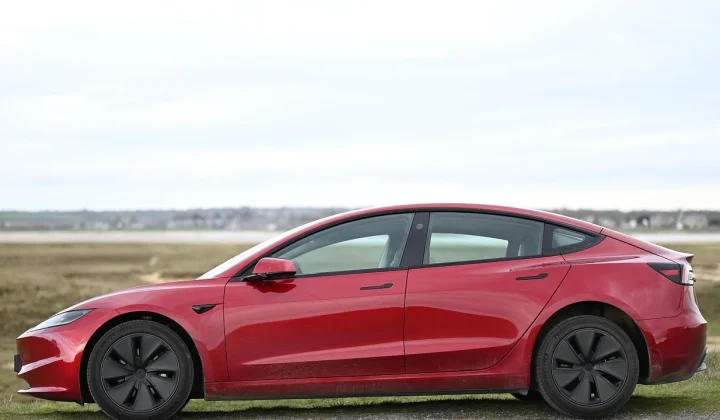
August’s model ranking also underscored the growing importance of smaller, lower-cost EVs. The BYD Yuan Up, known as the Atto 2 in some markets, joined the BYD Seagull, Leapmotor A10 and BYD Dolphin among the leading models during a slower month for the Tesla Model 3.
The BYD Seagull posted 31,000 registrations, its best result of the year. Brazil accounted for 8,299 registrations and Indonesia added 5,560, compared with 10,103 in China. The BYD Dolphin registered 28,388 units, its strongest performance since December 2023, helped by 6,740 registrations in Brazil and 1,202 in South Korea.
Leapmotor and BYD expand their model momentum
Leapmotor’s A10, marketed as the B03X in export markets, continued its rapid production ramp-up. The small crossover was 13th in the year-to-date ranking after climbing four positions, while its August result placed it among the month’s leading small EVs. The report said overseas shipments are expected to begin soon, although no market launch timetable was specified.
BYD also placed the Fang Cheng Bao Ti 7 in ninth place for August, with nearly 24,000 registrations. It was a year-best result for the large crossover EV and highlighted the scale BYD is building across brands beyond its core passenger-car line-up.
Further down the market, the new-generation Wuling Bingo Pro reached approximately 15,000 registrations, the nameplate’s best result in 15 months. Chery’s QQ3 EV delivered 12,579 units as production increased, putting it within reach of the global top 20 if its ramp-up continues.
Toyota’s RAV4 PHEV also returned to the global top 20 with close to 14,000 registrations following its new generation and broader international rollout. That total was almost double the peak recorded by the previous-generation RAV4 PHEV, according to the report.
Tesla retains the annual lead, but competition is broadening
Year to date, the Tesla Model Y remained well ahead of the market, with sales reported at roughly twice those of the second-placed BYD Song. The Geely Xingyuan had closed to within about 3,500 units of the Song, leaving the battle for second place closely contested.
Among EVs not produced in China, Tesla’s Model Y and Model 3 retained the top two positions. However, the Toyota BZ4X moved into third, followed by the BMW iX1 and X1 PHEV, with the Skoda Elroq rounding out the top five. Toyota’s BZ4X sales and production were reported to be up 116% year on year.
At manufacturer level, Leapmotor recorded its second consecutive month above 100,000 units and grew 81% year on year in August, overtaking Geely for the month. The results point to a global plug-in market increasingly shaped by BEV growth, strong Chinese exports and rising demand for smaller electric vehicles.