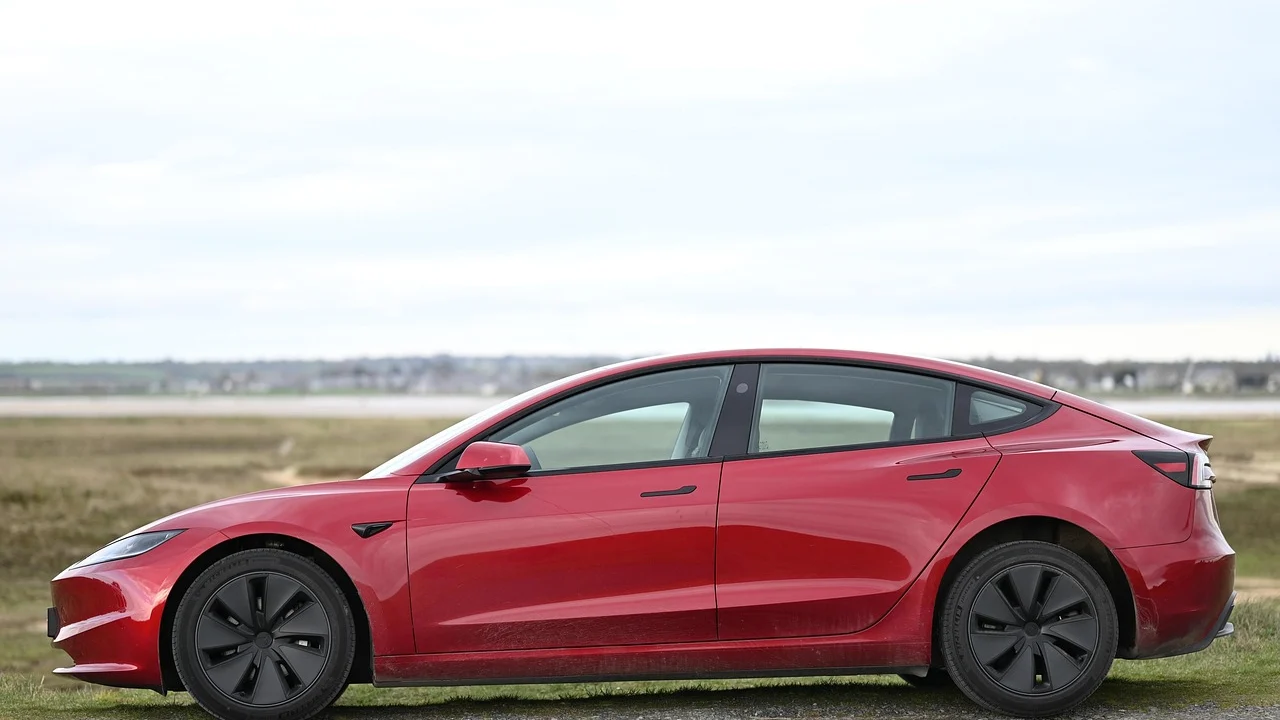
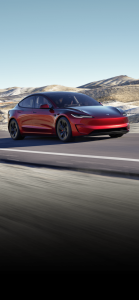
Tesla has introduced a new Model 3 Performance, positioning the electric sedan as its most driver-focused version of the Model 3 to date. The new flagship trim combines a more powerful dual-motor drive unit with model-specific chassis components, adaptive damping, revised Track Mode software and aerodynamic changes intended to improve both circuit capability and everyday comfort.
The launch comes six years after the first Model 3 Performance deliveries, according to Tesla. Rather than presenting the vehicle as simply a higher-output variant, the company says the latest model builds on the broader refinement work introduced with the updated Model 3 platform, including improvements to cabin noise, vibration and harshness.
A new performance drive unit and chassis package
At the centre of the new car is Tesla’s latest-generation performance drive unit, called Performance 4DU. Tesla says the unit can provide up to 22% more continuous power, 32% more peak power and 16% more peak torque than the drive unit used in the previous Model 3 Performance.
The company also claims the added output has not come at the expense of efficiency. Tesla reports an approximately 2% reduction in energy consumption compared with the prior-generation Model 3 Performance, though it has not provided further details on the relevant test cycle or driving conditions in its announcement.
Power is delivered through forged, staggered 20-inch wheels fitted with Tesla-specific Pirelli P ZERO 4 performance tyres. The larger rear tyre contact patch is designed to handle the higher torque output and improve traction when accelerating out of corners. Tesla says the tyre configuration also enabled changes to roll stiffness intended to reduce head movement for occupants while maintaining ride comfort.
The chassis receives several hardware upgrades beyond the wheel-and-tyre package. Tesla lists adaptive dampers with hollow piston rods, a multi-section stabiliser bar, ultra-high-strength steel springs and stiffer suspension top mounts. These changes are intended to improve stiffness and handling response while reducing mass, according to the company.
Tesla’s Vehicle Dynamics Controller manages front and rear motor torque distribution with adjustments made hundreds of times per second, Tesla says. The new Model 3 Performance uses a more rear-biased torque split, taking advantage of the larger rear tyre during corner exits. Track-ready brake pads are also fitted as standard, with Tesla saying they provide more immediate deceleration and higher thermal capability for sustained performance driving.
Adaptive damping arrives on the Model 3
The new Model 3 Performance is the first Model 3 to receive Tesla’s Adaptive Damping system. The system is exclusive to this version of the sedan and is designed to react in real time to road conditions and driver inputs.
Because the suspension controls are integrated with Tesla’s in-house vehicle software, the company says the system can be updated through over-the-air software releases. That approach is consistent with Tesla’s broader strategy of using software to alter or refine vehicle behaviour after delivery, rather than relying entirely on fixed mechanical calibration.
Drivers can select among three suspension settings. Standard mode is intended to prioritise comfort and absorption while retaining controlled handling. Sport mode is designed to deliver faster body control and sharper steering response, while continuing to adapt to rougher roads. Track mode focuses on body control and response for closed-circuit use, with reduced adaptation; it is automatically selected when Track Mode is activated.
Adaptive damping is also a central addition to Track Mode V3, which combines motor management, suspension settings, powertrain cooling and the Vehicle Dynamics Controller within one system. Tesla says it has revised the calibration of handling balance, stability assistance, regenerative braking and ABS controls to make the vehicle more predictable under different track conditions.
The updated Track Mode interface provides additional vehicle information and controls. Tesla says the revised software is intended to give drivers more freedom to explore the car’s performance capability in varying circuit environments while preserving a more consistent response to steering, braking and accelerator inputs.
Aerodynamic changes serve a functional role
The performance version is distinguished from other Model 3 variants by a specific front and rear fascia, front splitter, rear diffuser and spoiler. Tesla says these parts were developed as functional aerodynamic components rather than solely visual differentiators.
Compared with the preceding Model 3 Performance, Tesla claims the new exterior package reduces drag by up to 5%, cuts lift by 36% and improves front-to-rear lift balance by 55%. The company says the objective was to improve airflow across individual surfaces and across the vehicle as a complete system.
For an electric performance sedan, aerodynamic work can affect more than high-speed stability. Lower drag can support energy efficiency, while improved lift balance can help give the chassis a more consistent feel at speed. Tesla has not published independent testing data alongside these claims, but the figures underline the company’s attempt to develop the new Performance model as a more differentiated product rather than a software-led output upgrade.
Sport seats and greater cabin refinement
Inside, the Model 3 Performance gains new Sport seats with increased bolstering and a lower, more engaging seating position. Tesla says the redesigned seat geometry improves lateral support during cornering while retaining the practicality expected of a daily-use sedan.
The seats include 12-way power adjustment, heating and ventilation, matching the comfort features offered in Model 3 RWD and Long Range AWD versions. The Performance model also receives the updated Model 3’s noise-reduction measures, including 360-degree Acoustic Glass, enhanced body sealing and additional treatments intended to reduce noise, vibration and harshness.
That combination is important to Tesla’s positioning of the car. The company is seeking to pair more focused track capability with qualities expected in a regular road car: quieter cruising, comfort-oriented suspension settings and full seat functionality. In a performance EV market where output figures alone are increasingly common, Tesla’s new Model 3 Performance places particular emphasis on chassis integration, software control and usability alongside higher motor performance.